In a world once ruled by retaliation—where justice meant “an eye for an eye”—patience had no place. Before Christ, the Law permitted vengeance, and impatience thrived in its loopholes. But something radical happened when the Lord of patience stepped into history.
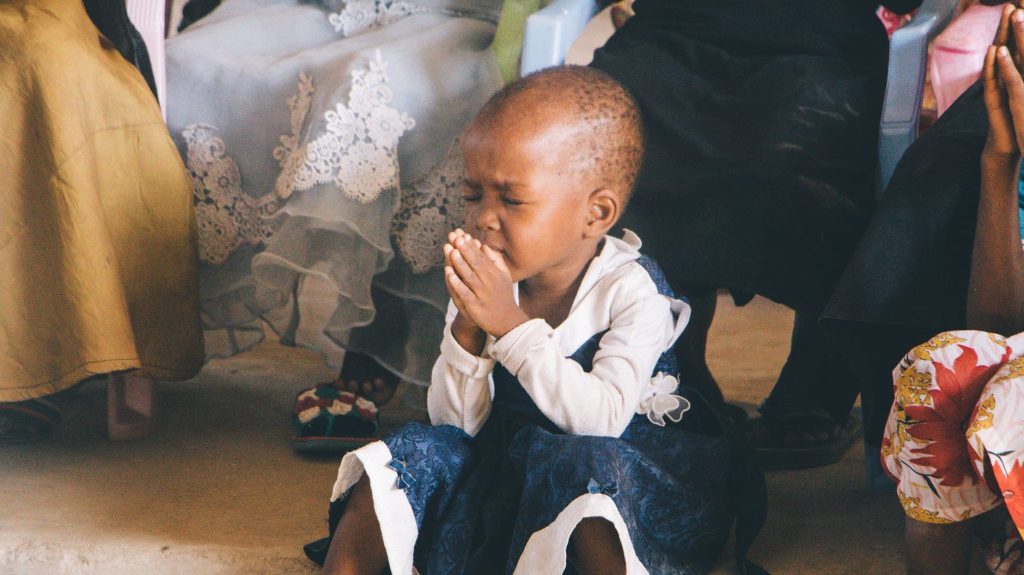
Saint Teresa longed to climb a mountain and cry out to the world: “Pray, pray, pray.” Her urgency echoes Christ’s own command: “We ought always to pray and not to faint” (Luke 18:1). Prayer is not merely a spiritual discipline—it is the lifeline of grace, the breath of the soul, the key to the treasury of heaven.
Author and psychotherapist Thomas Moore offers a profound interpretation of the Gospels—not as a blueprint for religion, but as a guide to a transformative way of life.
Last night, I found myself chasing a beautiful moon—driving a little slower, craning my neck between stoplights, then parking my car and literally chasing the moon trying to capture the moment before it slipped away. Its soft glow filled me with awe and wonder, pulling me backward in time, to a tiny nursery painted in the gentlest shade of sky. Above the crib hung a Hey Diddle Diddle print, the cat with the fiddle smiling down while the cow leapt forever over the moon.
Jesus says, “I am the resurrection and the life; whoever believes in me, even if he dies, will live, and anyone who lives and believes in me will never die.”
Yesterday, I was home, recovering from Covid following the doctor’s orders to isolate until tomorrow. I was sad that I was unable to attend mass in person. However, it was the responsible choice as I don’t want to impact others if I’m possibly still contagious. I was loving my neighbor.
In the following scripture, we are reminded of the vanity of laboring, toiling, and acquiring. It is an expression of what life would be like apart from the presence of God. Sorrow, grief, and restlessness would seem to be all there is. It’s a poetic way of expressing the futility and fleeting nature of human pursuits.
Vanity of vanities, says Qoheleth,/ vanity of vanities! All things are vanity!
Here is one who has labored with wisdom and knowledge and skill, and yet to another who has not labored over it, he must leave property. This also is vanity and a great misfortune. For what profit comes to man from all the toil and anxiety of heart with which he has labored under the sun? All his days sorrow and grief are his occupation; even at night his mind is not at rest. This also is vanity.
The word of the Lord.
Ecclesiastes1:2; 2:21-23
In this context, “vanity” doesn’t mean pride or self-absorption (as in modern usage), but rather emptiness or meaninglessness.
The writer reflects on life’s pursuits—wisdom, pleasure, work, wealth—and concludes that none of them bring lasting fulfillment. It’s a philosophical lament that everything “under the sun” (i.e., earthly life) is temporary and cannot satisfy the soul.
Ecclesiastes isn’t nihilistic—it’s realistic. It urges us to recognize the limits of worldly pursuits and seek meaning through reverence for God and live with humility and gratitude, knowing life is short.
On the other hand, Jesus teaches us to be “rich in what matters to God.” What does matter to God? That we number our days right and grow in wisdom of heart. We do not have to do that on our own, for we receive those graces at baptism, by which we have died and our life is hidden with Christ in God. He asks one thing of us, “Follow Me.”
Life’s richness, then, consists in seeking the One who is above, and claiming the new self that we receive through him, for Christ is all. Our treasure lies in claiming Christ our life, who has appeared.
Let us live for an audience of one, for God today. Amen
Today the Church celebrates the feast of Saint Ignatius of Loyola, a soldier turned saint whose life was transformed by deep introspection and spiritual discernment. As the founder of the Jesuits, Ignatius championed a path of disciplined prayer, service, and intellectual pursuit. But perhaps his most quietly radical contribution was a daily practice called the Examen—a gentle yet powerful way to examine our conscience.