

Author and psychotherapist Thomas Moore offers a profound interpretation of the Gospels—not as a blueprint for religion, but as a guide to a transformative way of life.
Continue reading “Living the Gospel Today”Author and psychotherapist Thomas Moore offers a profound interpretation of the Gospels—not as a blueprint for religion, but as a guide to a transformative way of life.
Continue reading “Living the Gospel Today”
Peace isn’t just a lofty ideal or a distant dream—it’s a gift. It’s the first gift Christ offers: “My peace I give to you” (John 14:27). But it’s not a passive gift we receive. It’s active, challenging, and deeply personal. There are words of our day we can hang onto and peace is one of those words. In fact, Pope Leo has spoken about peace, 100 days, every day he’s been in office.
Continue reading “Blessed are the Peacemakers”
“If a man is to live, he must be all alive, body, soul, mind, heart, spirit.” — Thomas Merton
Continue reading “Are You Fully Alive?”
As you all know, the Spirit inspires me through music at times. The other day an oldie but goodie came on my spotify list and I started jamming in the car. “Don’t Go Breaking My Heart” by Elton John and Kiki Dee, was one of my favorites in high school. I started pondering what God might being saying to us through the lyrics:
Continue reading “Don’t Go Breaking My Heart”
These days, it’s easy to think that blessings are earned—through hard work, hustle, or even spiritual striving. But the truth is, grace doesn’t operate on merit; it flows freely from God.
Continue reading “Staying Faithful to Grace”
Most of us have felt that awkward moment of walking into a room and wondering where to sit. Do I belong here? Will anyone notice me? Should I try to look confident, even if I’m not?
Continue reading “When You’re Not the Guest of Honor”
With all the recent tragedy in Central Texas our hearts are heavy with the loss. In Houston, we know someone who was impacted by the devastation. Situations like these bring us face to face with the fact that our lives can end on this earth in an instant, despite our age.
Continue reading “Remember Your Death”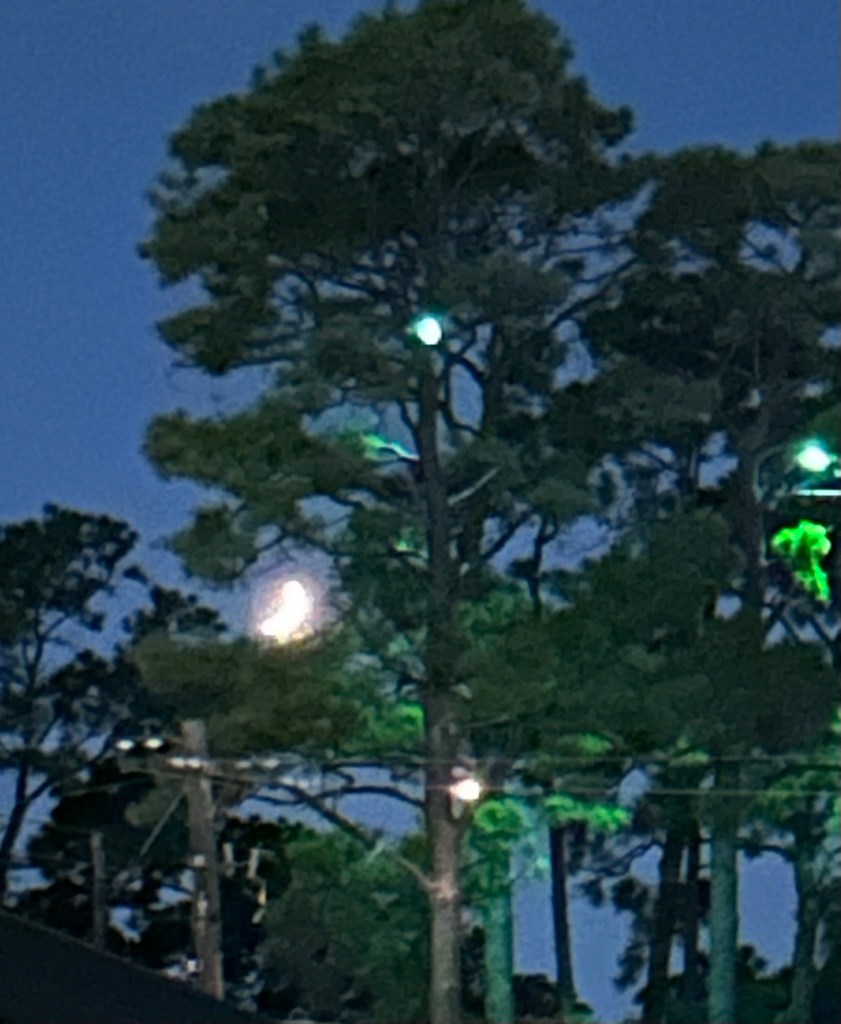
Last night, I found myself chasing a beautiful moon—driving a little slower, craning my neck between stoplights, then parking my car and literally chasing the moon trying to capture the moment before it slipped away. Its soft glow filled me with awe and wonder, pulling me backward in time, to a tiny nursery painted in the gentlest shade of sky. Above the crib hung a Hey Diddle Diddle print, the cat with the fiddle smiling down while the cow leapt forever over the moon.
Continue reading “Chasing the Moon 🌙”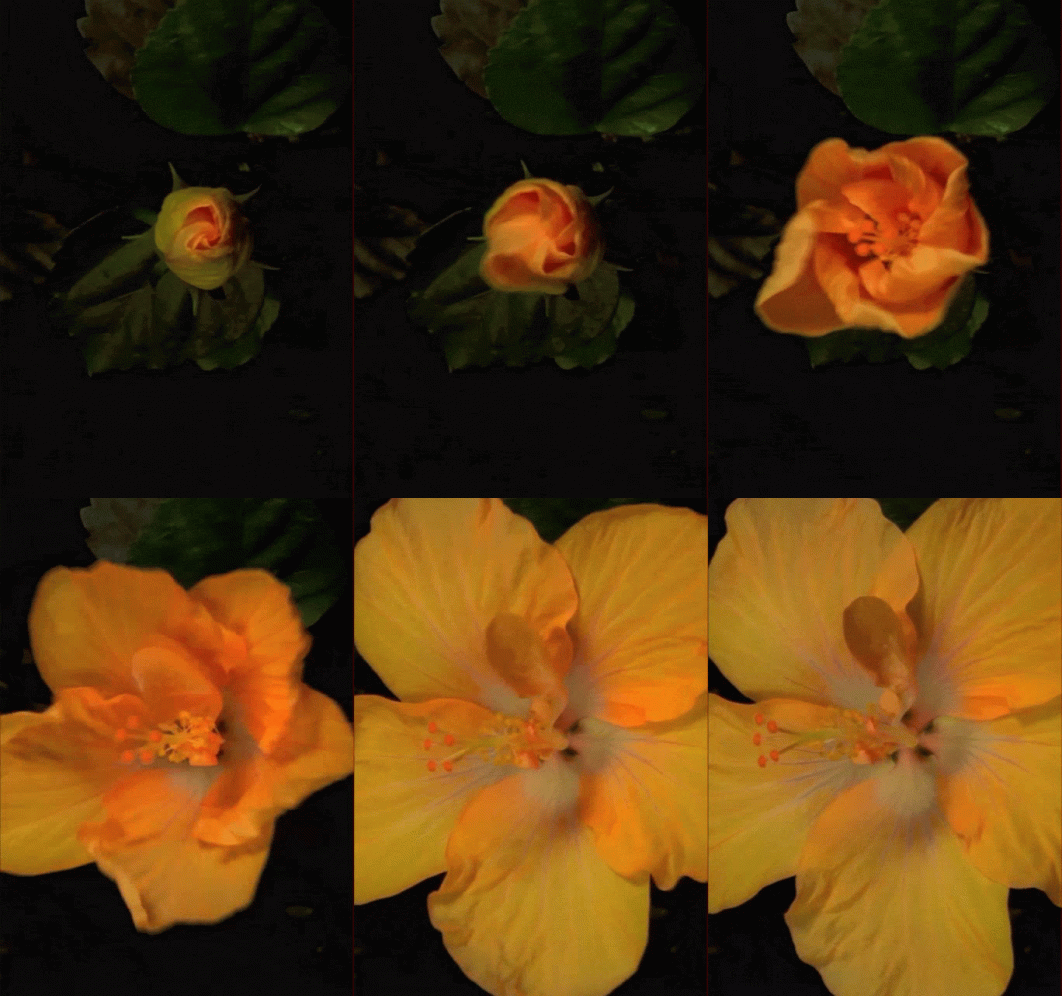
There’s a quiet miracle happening in gardens and fields, on windowsills and forest floors. Flowers, even those rooted in shadow, bend toward the light. It’s not dramatic. It’s not loud. But it’s persistent. This movement—called phototropism—is a lifeline. Without light, the flower cannot bloom. Without turning, it begins to fade.
Continue reading “Bending Toward the Light”
As I contemplate further what it means to walk through the narrow gate, it really boils down to choice. Will I choose to walk through the open door of love?
Continue reading “Blooming In The Light” Smitten With Goodness