
What makes a 16th-century Carmelite nun one of the most compelling spiritual guides of all time? St. Teresa of Ávila, who we celebrate today, wasn’t just a mystic cloistered in prayer—she was a reformer, a writer, and a woman ablaze with love for God. Her legacy continues to shape how we understand prayer, grace, and the soul’s journey toward divine union.
A new study reveals a quiet but troubling shift: daily reading for pleasure in the U.S. has dropped more than 40% over the past two decades. In 2003, 26% of Americans read on an average day. By 2023, that number had fallen to just 16%. Researchers warn that this decline isn’t merely cultural—it’s deeply personal and potentially harmful. Reading is linked to improved mental health, deeper empathy, and stronger cognitive function across all age groups. It’s not just entertainment; it’s nourishment.
Sometimes I get overburdened by the amount of things I’ve accumulated in my life and the things I have hung onto. Things passed down to me as well as things hanging around my house that are my children’s that I just can’t seem to let go of. It’s tucked away in closets out of sight. Can any of you “boomers” relate?
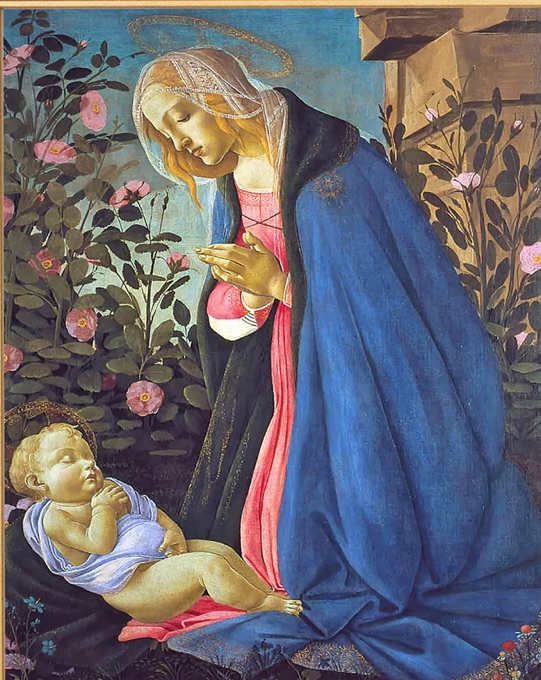
Today, as the Church celebrates the Blessed Virgin Mary, we remember her not only as the Mother of God, but as our gentle companion on the journey of faith. Pope Saint John XXIII once called her “the dawn of eternal day,” a radiant presence who scatters the shadows and restores the splendor of heaven. In her, we glimpse the promise of grace fulfilled—and the path by which we too may walk toward it.
The Beatitudes are often read as virtues to aspire to—poverty of spirit, mercy, peacemaking, purity of heart. But what if they are not goals, but descriptions of a soul already undone? What if they name the places where we’ve fallen, surrendered, and suffered—and declare those places holy?
Like a beautiful leaf that has fallen from its tree and to the ground, it remains a leaf. To live the Beatitudes is to resist the world’s brokenness not with power, but with presence. It is to say: I will not harden. I will not numb. I will not become what wounded me.
🕊️ Poverty of Spirit This is not self-rejection. It is the quiet refusal to build identity on ego, success, or control. It is the posture of open hands, saying, I have nothing to prove. I am already held. In a world obsessed with achievement, poverty of spirit is a radical trust in grace.
“Blessed are the poor in spirit, for theirs is the kingdom of heaven.”
💧 Mercy Mercy is not weakness. It is the strength to see suffering and not turn away. It is the courage to forgive when vengeance would be easier. Mercy resists the world’s cruelty by choosing tenderness over retaliation.
“Blessed are the merciful, for they shall obtain mercy.”
🌿 Peacemaking Peacemaking is not passive. It is the active work of healing what has been torn. It is the refusal to let division have the final word. In a world of polarization, peacemaking is a quiet revolution—one that begins in the heart and ripples outward.
“Blessed are the peacemakers, for they shall be called children of God.”
🌙 Purity of Heart Purity is not perfection. It is clarity. It is the stripping away of pretense, the return to what is true. In a world of distraction and performance, purity of heart is a luminous resistance—a way of seeing God in all things, and especially in the broken.
“Blessed are the pure in heart, for they shall see God.”
To live the Beatitudes is to let our suffering become soil. To let our surrender become sanctuary. To let our falling become the very ground from which healing and wholeness rise.
This is not moralism. It is mysticism. It is the way of Christ—who did not climb upward, but descended into love.
Many Christians ask: Why not just confess directly to God? After all, He sees the heart and hears every prayer. And yes—Catholics absolutely believe that God can forgive sins through sincere personal repentance. But the Church also teaches that Jesus instituted a sacramental way of receiving that forgiveness: through Confession.
In a world that constantly tugs at our hearts—through ambition, anxiety, and the endless chase for approval—there’s a practice that offers radical peace and heroic love: spiritual detachment.
We don’t mean to forget. But somewhere between childhood wounds and adult striving, we begin to believe that love must be earned. We build emotional programs for happiness— seeking security, affection, control— and call it strength, discipline, even holiness.
When Jesus confronts the Pharisees, his words are not gentle suggestions, they are a piercing summons to transformation. “Reform your life,” he commands, not only to them but to us. This is not surface-level adjustment; it is a radical re-centering, changing the direction of our normal path.