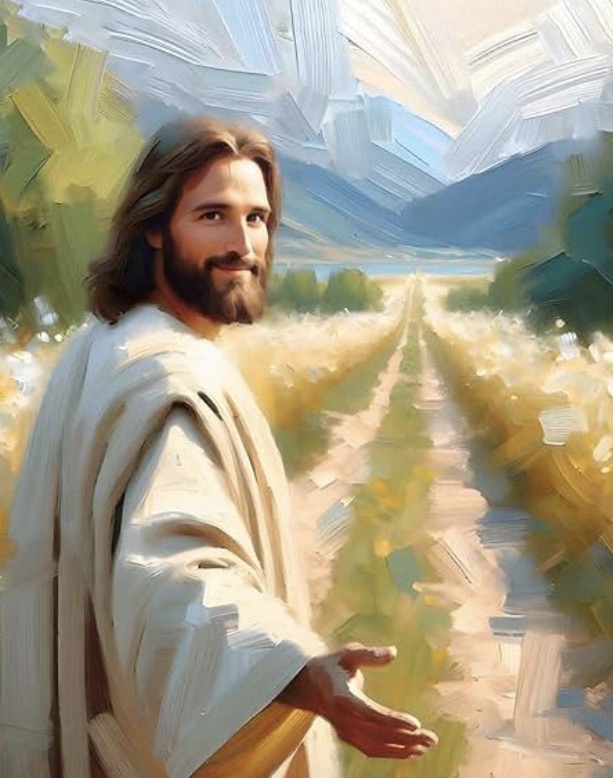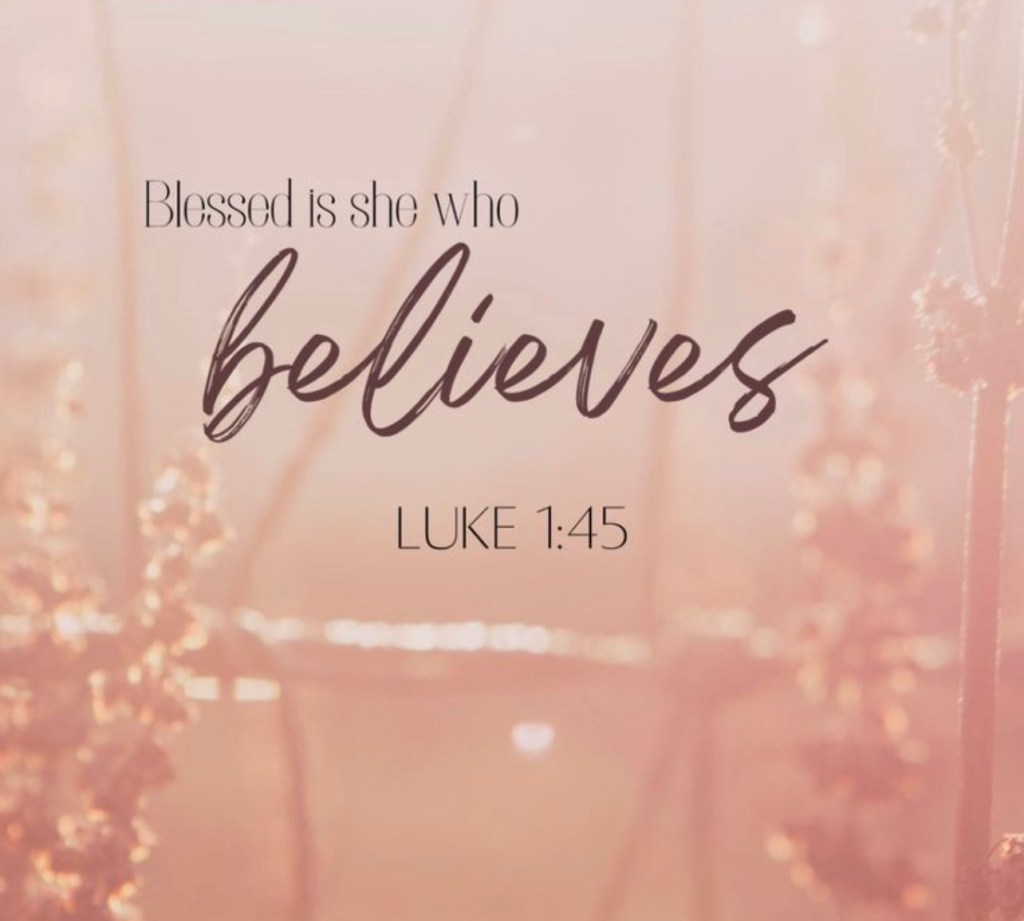

Do you actively seek God’s will in your day? Or is it an afterthought?
Continue reading “Seeking God’s Will”
Do you actively seek God’s will in your day? Or is it an afterthought?
Continue reading “Seeking God’s Will”
Grant, O Lord, that we may always revere and love your holy name, for you never deprive of your guidance those you set firm on the foundation of your love.
Through our Lord Jesus Christ, your Son, who lives and reigns with you in the unity of the Holy Spirit, God, for ever and ever.
Hallowed… Holy. What do I name as holy in my life?
Jesus, I love You.

The saints understood the need for a singular focused heart. Not one formed by the world but one aligned with our creator.
St. Benedict of Nursia says, “You change your life by changing your heart.” St. Therese of Lisieux stated: Jesus, help me to simplify my life by learning what you want me to be, and becoming that person.
As scripture reminds us, we are to be new wine.
No one patches an old cloak with a piece of unshrunken cloth, for its fullness pulls away from the cloak and the tear gets worse. People do not put new wine into old wineskins. Otherwise the skins burst, the wine spills out, and the skins are ruined. Rather, they pour new wine into fresh wineskins, and both are preserved. Matthew 9:14-17
Thank you, Lord, for giving me a new heart to fill up with the things you deem worthy.

Thanksgiving is the public acknowledgement or celebration of divine goodness. It is the act of giving thanks, a prayer expressing gratitude. It is easy to look beyond our circle of influence and be overwhelmed by the critical and inconsiderate world we see in the media and social media. With grace, we can open our eyes and hearts to the divine goodness in front of us when we slow down and be present in our life.
It is relatively easy to forget about all the good things God has done for us and to neglect giving thanks for our blessings. Reading Psalm 103 can help foster a spirit of thanksgiving by keeping our eyes focused on the good God has done for us.
He fills our days with good things.
Psalm 103:5
Eucharist, from the Greek word “eucharista”, means thanksgiving. The Catholic Church teaches that “the Eucharist is ‘the source and summit of the Christian life.’” Participation in Holy Communion during Mass, consumed with a humble heart, allows the Spirit to increase in me, decreasing my strong will and self-reliance. This allows me to fill my heart with His goodness and surrender to Christ as King of my life.
Sometimes we must jump with both feet into faith and trust. Other times we need to slow down and appreciate what is in front of us. Expressing gratitude helps us cultivate a thankful heart. Gratitude turns what we have into enough.
Happy Thanksgiving and for being Smitten With Goodness!

We are called to have a grateful heart. Throughout scripture there are repeated calls to action to give thanks to God. Thanksgiving is to always be a part of our prayers. Some of the most remembered passages on the giving of thanks are the following:
“Rejoice always, pray without ceasing, in everything give thanks; for this is the will of God in Christ Jesus for you” (1 Thessalonians 5:16-18).
“Be anxious for nothing, but in everything by prayer and supplication, with thanksgiving, let your requests be made known to God” (Philippians 4:6).
“Therefore I exhort first of all that supplications, prayers, intercessions, and giving of thanks be made for all men” (1 Timothy 2:1).
Of all of God’s gifts, the greatest one He has given is the gift of His Son, Jesus Christ. On the cross of Calvary, Jesus paid our sin debt, so a holy and just Judge could forgive us our sins and give us eternal life as a free gift. This gift is available to those who will call on Christ to save them from their sin in simple but sincere faith (John 3:16; Romans 3:19-26; Romans 6:23; Romans 10:13; Ephesians 2:8-10). For this gift of His Son, the gift which meets our greatest need, the Apostle Paul says, “Thanks be to God for His indescribable gift!” (2 Corinthians 9:15).
We have a choice. In life there will always be those things that we can complain about but there will also be much to be thankful for.
May God grant that He may find us grateful every day for all of His gifts, spiritual and material. God is good, and every good gift comes from Him (James 1:17). For those who know Christ, God also works everything together for good, even events we would not necessarily consider good (Romans 8:28-30).
May He find us with a grateful heart.

Gratitude is a virtue most worthy of our cultivation. In all the Christian life, gratitude is to be planted, watered, dressed, and harvested. Gratitude gets at the very essence of what it means to be created, finite, fallen, redeemed, and sustained by the God of all grace.
Ingratitude was at the heart of the Fall, and at the heart of what’s fallen about us to this day. “Although they knew God, they did not honor him as God or give thanks to him” (Romans 1:21). Again and again throughout the Old Testament, especially in the Psalms, it is gratitude — giving God thanks — that is the fitting response to his gracious acts of deliverance for his people.
It was gratitude to the Father that Jesus expressed at that first Maundy Thursday table as he held out the bread and cup to his disciples (Matthew 26:27; Mark 14:23; Luke 22:17–19; 1 Corinthians 11:24). It is profound and enduring gratitude, among other things, that his sacrificial death and triumphant resurrection summon in the born-again heart. In the daily Christian life, it is the genuine giving of thanks for God’s gifts that keeps us from idolatry and sinful asceticism (1 Corinthians 10:30–31; 1 Timothy 4:3–4).
Will you make an intentional effort to slow down, take stock, and express gratitude to the glory of God? Will you count your many blessings including God for his greatest gift — the gift of himself and his Son.
Thank you, Lord, for your self-giving death for us, and in your resurrected life

Research suggests that gratitude can’t simply be grouped with other emotions, like happiness or anger, because unlike other emotions, gratitude takes a conscious effort. To be grateful, we must first take the time to recognize that something has been done for our benefit. Living a life of gratitude isn’t easy. Like any spiritual discipline, it requires time, effort, and faithful practice.
Even when we can find reasons to be grateful to God, it is often more challenging to be appreciative of others. It’s natural to think that the opposite of gratitude is being ungrateful, but it’s actually selfishness or self-conceit. When you believe you deserve the good things you receive, you don’t feel the need to be grateful to others.
Gratitude can be difficult because it requires a new way of thinking – a different attitude.
And we may just have to accept life as it is and be grateful for what we have. Research suggests that the return on investment with the practice of gratitude is too abundant to ignore.
Gratitude makes you a better person, not just in the sense of doing nice things for other people, but it also carries with it joy. When I’m more grateful, even though I’m acknowledging that I’m indebted to other people, life feels more like a gift. When life feels like a gift, I feel more engaged and rejoice in the little things around me. In this way, it can act as a helpful balance to irritation, anger, and frustration.
Gratitude motivates us to perform our own acts of kindness for others.
How do you use your good health?

We will never be free of trials and temptations in our earthly life. No one in this world is so perfect or holy as not to have temptations sometimes and we can never be entirely free from them. But if we resist them, they will be very useful to us; for by experiencing them we are humbled, cleansed, and instructed. There is no place so holy.
Our eyes should see only for God, our feet walk only for Him, our hands labor for Him alone; in short, our entire body should serve God while we still have the time. Then, when He shall take our health and we shall near our last day, our conscience will not reproach us for having misused it.
–St. John Bosco
Thank you, Lord, for allowing me to understand that temptations can be used to draw me closer to Your Goodness.

Since love (caritas) is what God is, it is also that virtue that conforms us most dramatically to God. Thomas Aquinas says that caritas is friendship with God. In his great farewell discourse, the night before his death, Jesus says to his disciples that he no longer calls them servants, but friends—and in this he opens up a new world.
In any other religion, a human being could be called, vis-à-vis God, a creature, a penitent, or an eager supplicant, but only in Christianity could she be called an intimate of God. This is true because in Christ, God has become one of us, thereby establishing a parity beyond our capacity even to imagine.
The participation in what God is is what Aquinas means by caritas, friendship with God. The moral challenge, of course, is to live out the implications of that friendship, listening and speaking to God, obeying the promptings of his voice, opening our heart to him, and, above all, loving what he loves—which is to say, everyone and everything.
Thank you, Lord, for giving us the greatest love of all.

Many individuals throughout time have chosen to live a life of poverty, simplicity, and service. I’m seeing how this strategy is a good one to keep a singular focus, to love God with all our heart.
Father Richard Rohr of the Center for Action and Contemplation recently pointed out how we might embrace a life of “poverty,” even in times of sufficiency and abundance:
Letting go of our own small vantage point is the core of what we mean by conversion, but also what we mean by Franciscan “poverty.” Poverty is not just a life of simplicity, humility, restraint, or even lack. Poverty is when we recognize that myself—by itself—is largely powerless and ineffective. John’s Gospel puts it quite strongly when it says that a branch that does not abide in Jesus “is withered and useless” (see John 15:6). The transformed self, living in union, no longer lives in shame or denial of its weakness, but even rejoices because it does not need to pretend that it is any more than it actually is—which is now more than enough!
Center for Action and Contemplation Daily Meditations
Thank you, Lord, for a simple love, opening me up to great things.